Unlikely allies: Why both parties want action on license plate cameras
At least nine proposals are pending to ban or limit surveillance technology as concerns over privacy, civil liberty bridge the political divide in Washington
WASHINGTON (InvestigateTV) — Automated license plate readers have garnered something rare in modern politics: strong bipartisan agreement.
“You have outrage from the far left, and you have outrage from the far right, because you’re verging in this 1984 totalitarian-type environment where there’s nowhere you can go and not be surveilled,” said Rep. Greg Steube.
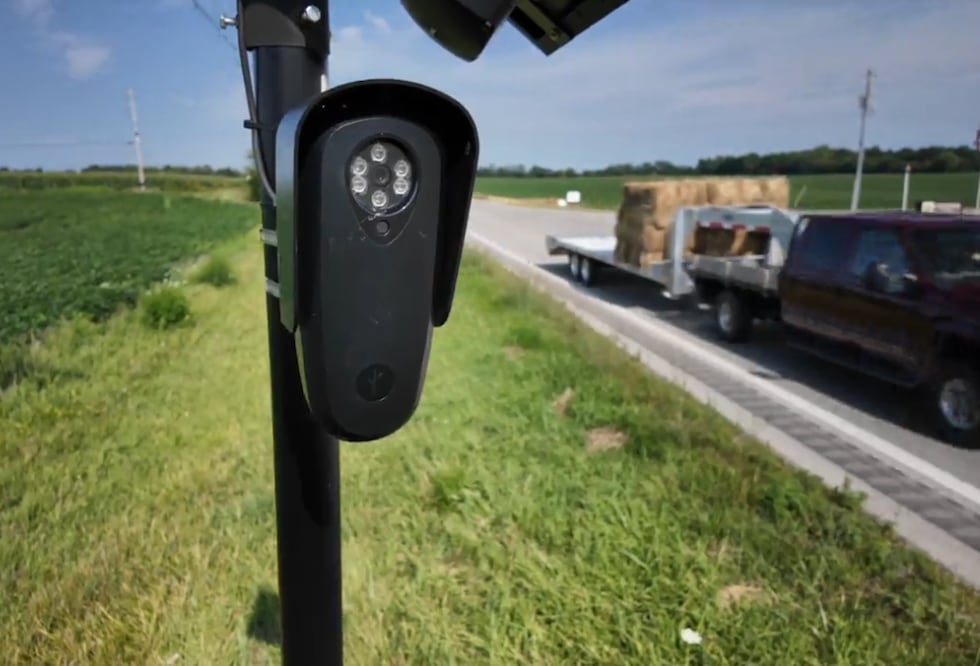
The Florida Republican sits on the House Permanent Select Committee on Intelligence, and said the scope of the technology’s use by law enforcement — particularly Flock Safety’s nationwide data-sharing network — and concerns about oversight of that use have brought together unlikely allies.
“[It’s] probably one of the very few things that Bernie Sanders and I agree upon,” Steube said.
Senators and House members from both parties told InvestigateTV that action from Congress, not a patchwork of local rules, is needed, and at least nine proposals are now pending or expected on Capitol Hill that would ban or limit mass surveillance technologies like Flock’s.
The push follows InvestigateTV’s year-long investigation into Flock and the growing controversy over license plate cameras as well as a September Senate hearing at which two of InvestigateTV’s interview subjects testified.
‘This needs to be reined in’
Flock Safety, which is by far the largest provider of license plate reader technology to law enforcement, says it has more than 120,000 cameras across 49 states, with more than 6,000 agencies plugged into its data-sharing network.
This means even a small department with a handful of cameras can search the data captured by tens of thousands of Flock devices used by jurisdictions both near and far — and that its camera data is often reciprocally queried by thousands of other departments across the country.
Flock and its proponents assert that this connectivity has led to an increase in crimes solved, but Steube said he sees it as a double-edged sword.
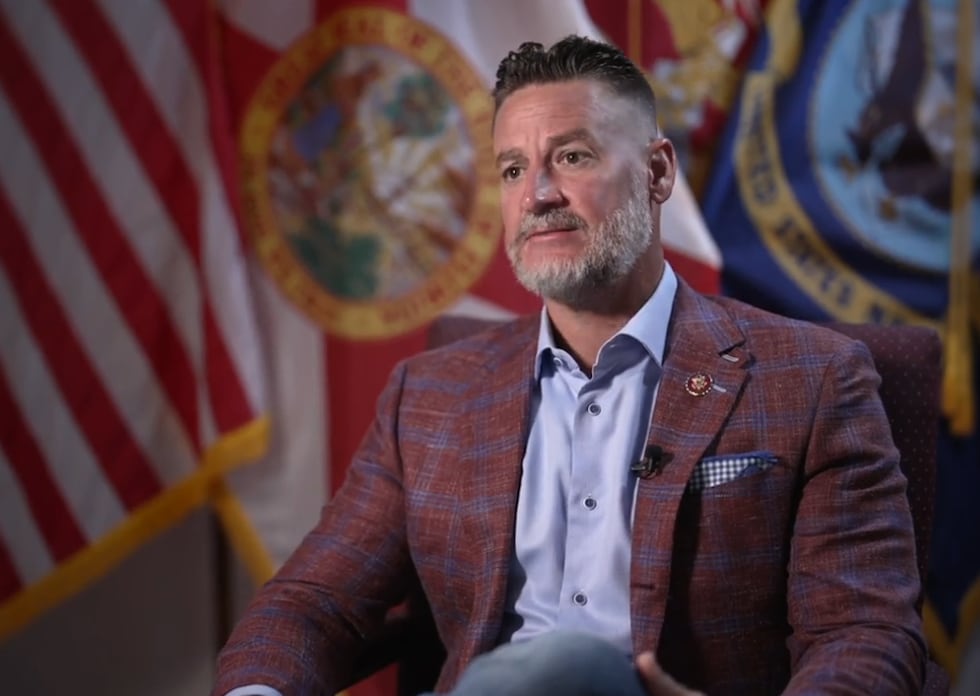
“If it’s a true crime that is being committed, you obviously want law enforcement to have the ability to do that. But if that has that much of a scope and that much power, it obviously in the wrong hands or in abusive hands can be abused.”
Abuse of the system via personal or retaliatory searches is one of the primary criticisms of Flock, and though the company has emphasized the tools it has made available to audit use and flag misuse, the list of officers and law enforcement employees fired or arrested over such abuse has continued to grow.
While some states have passed legislation looking to increase oversight of automated license plate readers, no national rules govern the technology.
“There is no nationwide regulatory framework that says, ‘This is what you can do and not do as it relates to this,’” Steube said. “Even in my district, every law enforcement agency has different rules and policies as to how you can use it and who can use it.”
That patchwork emerged largely because Flock’s nationwide network was pieced together over time via contracts with individual jurisdictions. InvestigateTV found that in some cases those deals were made with minimal public discourse or without a vote by even local officials.
Asked whether Congress needs to vote now to rein things in at the national level, Steube did not hesitate.
“I definitely 1,000% think we need to do that,” he said.
Right after the interview, Steube filed his proposed solution.
He said he thinks the outrage on both ends of the political spectrum is what gives the effort a chance.
“These days, the only thing that definitely passes Congress is something that’s overwhelmingly bipartisan,” he said. “And you’re seeing people on both sides of the aisle talk about how this needs to be reined in.”
The proposals
So far, there have been nine legislative efforts introduced or promised by lawmakers that would seek to put limits on the use of automated license plate readers, with the details varying from warrant requirements to outright bans.

Among the bills that congressional records show have been formally filed:
- H.R. 9800, the Protection Against Mass Surveillance Act, introduced July 21 by Rep. Tim Burchett, R-Tennessee. It would bar federal agencies from buying, deploying or operating automated surveillance systems. Its text names “an automated license plate recognition system, including a Flock Safety camera.” It would also bar state, local and tribal governments from using federal funds for those systems.
- H.R. 10221, the Flock-Off Act, introduced Sept. 2 by Rep. Thomas Massie, R-Kentucky. It would cut off federal funds for license plate reader and biometric camera systems, including related contracts, subscriptions and data-sharing arrangements, with some exceptions.
- H.R. 10606, the FLAFO Act, introduced Sept. 24 by Rep. Steube. It would generally bar federal agencies from buying, operating or accessing networked license plate reader systems, with access allowed only through a warrant. Exceptions include certain defense and security agencies, emergencies such as terrorism, and missing-person cases. It would tie Justice Department funding for state and local agencies to similar rules.
- H.R. 10691, the Ban Flock Act, introduced Oct. 1 by Rep. Alexandria Ocasio-Cortez, D-New York. It would prohibit federal agencies from using license plate readers or their data unless Congress passes a specific authorization law. It would require any authorizing law to limit retention of authorized data at 48 hours.
- H.R. 10822, the ALPR Accountability Act of 2026, introduced Oct. 15 by Rep. Pat Harrigan, R-North Carolina. It includes a warrant requirement for queries, deletion of records within one day, and a ban on indexing “expressive attributes” such as bumper stickers.
Senator Josh Hawley, R-Missouri, has promised legislation that would require similar guardrails, including mandatory audits and limits on data retention, as well as a prohibition on incorporating facial recognition technology.
Other bills address government surveillance more broadly, including license plate readers, such as H.R. 9716 by Rep. Keith Self, R-Texas, and H.R. 8470 by Massie, both of which would require warrants.
InvestigateTV asked Flock about the proposals aimed at the company’s technology.
A spokesperson said:
“Flock’s technology is an important public safety tool for law enforcement agencies across America, helping officers solve serious crimes and find missing people. We support thoughtful, bipartisan legislation that puts strong privacy, transparency, and accountability guardrails in place while preserving law enforcement’s ability to use technology responsibly to keep people safe.”
‘The more questions we asked, the more we felt it was crucial to get to the bottom of it’
Senator Ron Wyden, D-Oregon, made a similar case.
Wyden sent a letter to Flock more than a year ago demanding answers about the balance between privacy and security.
“We decided early on that this was all about warrantless mass surveillance,” Wyden said. “They stonewalled, and the more questions we asked, the more we felt it was crucial to get to the bottom of it.”
Wyden also noted how this concern has bridged across party lines.
“This issue transcends philosophy,” he said. “All over Oregon, all over the country, people are tired of having their privacy rights stomped on. And that’s what’s driving this.”

Whether it’s protecting constitutionally-afforded rights or preventing bad actors from using the technology to stalk and harass, Flock’s position has been that it is ultimately not the company’s job to police the police — that boundaries and accountability are in the hands of local elected officials.
And where some of his colleagues are pushing for federal action, Wyden said he is urging communities to take the decision into their own hands.
“I fall on the proposition that at the local level, people ought to look very carefully,” Wyden said. “And I’m recommending that people close up those cameras. Make it a local choice. People feel very strongly. I mean, my community is 3,000 miles from Washington, D.C. They want to call the shots. They don’t want these cameras.”
But still, Wyden said the company cannot hand off all responsibility.
“Of course, the vendor has a responsibility,” Wyden said. “And particularly, law enforcement is who you look to, to try and strike that balance.”
Constitutional concerns
Steube, the Florida Republican, said in his opinion Congress should write the rules because the network is interconnected nationwide — and at its core is an issue of constitutional significance.
“We should be able to fight child trafficking, kidnapping, armed robbery, all of these things that these cameras help with,” he said. “But we need to make sure that it’s within the United States constitutional framework when we do it.”
Questions on whether the use of technology like Flock’s violates protections against unreasonable search and seizure provided by the Fourth Amendment have been another top flash point.
The company has been adamant that its placement of cameras in public places and safeguards such as its revised default retention period of seven days “protect civil liberties while helping communities prevent, deter, and resolve crime.”
However, in October a federal judge called the technology “a large-scale, dragnet-type surveillance system” and ruled that an Oklahoma officer’s use of it — which was done without a warrant and, the court found, lacked probable cause — was a violation of the Fourth Amendment.
“It becomes constitutionally problematic when law enforcement can indiscriminately and passively catalog your whereabouts over an extended period of time and then use that information for any purpose whenever convenient,” the judge wrote in the ruling.
Wyden said he does not see liberty and security as opposing choices.
“We always wanted liberty. And we always wanted security,” he said. “And I continue to believe that in a country as strong and rich and good as ours, we can have both with smart policies.”
‘An old-fashioned citizens’ issue’
Lawmakers may disagree on the details of how to do it, but the concern about Flock and similar technology and the desire for something to be done have bridged an otherwise ever-deepening political divide on both Capitol Hill and Main Street America.
“Not being stalked and not being harassed is clearly a bipartisan issue. Nobody wants that,” said Democratic Senator Raphael Warnock of Georgia — where Flock Safety is headquartered.
“Safe from crime, safe from harassment and over-surveillance and stalking. You shouldn’t have to choose one or the other,” he said.
In a press conference following the September subcommittee hearing he hosted on the issue, Hawley, the Missouri Republican, had similar thoughts.
“I think that this is a nonpartisan issue,” he told InvestigateTV. “This is just an old-fashioned citizens’ issue.”
At the hearing, both Hawley and Sen. Cory Booker, D-New Jersey, emphasized the stakes by pulling from issues that normally signal the diametrical opposition of their respective parties: Hawley warned cameras could be placed outside gun shows, gun stores or shooting ranges, while Booker warned a state could use the technology to track and prosecute women who travel for reproductive care.
According to the published calendars, the 119th Congress has just over 20 working days left, and with the unofficial results of the midterm elections pointing to a shift to Democratic control of both chambers, committee assignments and leadership are expected to change once the 120th is convened.
But Sen. Richard Blumenthal, D-Connecticut, expressed optimism following the September hearing that the relatively unprecedented agreement could indicate action on the near horizon.
“I think there are some clear potential solutions that would have bipartisan support,” he said. “I think there may be an opportunity in the lame duck, if there’s enough consensus.”
Copyright 2026 Gray Media Group, Inc. All Rights Reserved.